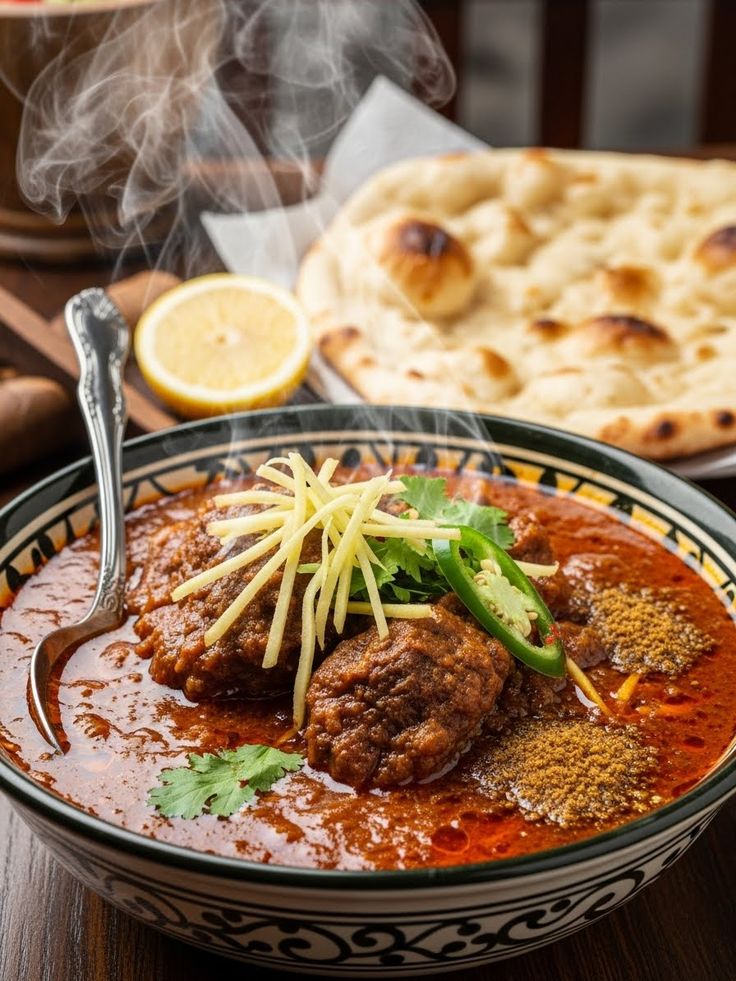
Introduction to Nihari
Nihari is a traditional slow-cooked stew that holds a special place in South Asian cuisine, particularly in Pakistan and North India. Known for its deep, rich flavor and thick texture, Nihari is usually enjoyed as a breakfast or brunch dish, especially on weekends and special occasions. The name Nihari comes from the Arabic word “Nahar,” meaning morning, reflecting its historical association with early-day meals prepared overnight.
Historical and Cultural Significance
Nihari originated during the Mughal era, where it was prepared for royal families and nobles. Over time, it became popular among the general population and evolved into a beloved street and home-cooked dish. Traditionally, Nihari was cooked overnight on very low heat and served at dawn. Today, it remains a symbol of patience, tradition, and culinary heritage, often served during gatherings and religious festivals.
Why Nihari is Considered Special
Nihari stands out due to its slow-cooking process and complex flavor profile. The dish relies on bone-in meat, marrow, and a unique spice blend that develops richness over time. Unlike regular curries, Nihari has a thick, silky gravy achieved through slow simmering and careful thickening. Each spoonful delivers warmth, depth, and comfort, making it a favorite among meat lovers.
Essential Ingredients Overview
The key ingredients of Nihari include beef or mutton with bones, as bones add body and flavor to the gravy. Wheat flour is used for thickening, giving Nihari its signature consistency. Ginger, garlic, and onions form the base, while whole and ground spices such as cloves, cardamom, cinnamon, fennel, coriander, and chili powder create its distinctive taste. Cooking oil or ghee enhances richness, and fresh garnishes complete the dish.
Preparation Before Cooking
Before starting, the meat should be washed thoroughly and cut into medium-sized pieces, preferably with bones intact. Ginger and garlic are crushed fresh for maximum aroma. Onions are thinly sliced to ensure even browning. All spices should be measured and kept ready, as Nihari requires careful timing and balance. Proper preparation helps maintain consistency throughout the long cooking process.
Initial Cooking Process
Heat oil or ghee in a heavy-bottomed pot and add sliced onions. Cook until the onions turn deep golden brown, as this color contributes significantly to the final flavor. Add crushed ginger and garlic and sauté briefly until fragrant. Add the meat pieces and cook on medium heat, stirring frequently until the meat changes color and starts releasing its natural juices.
Spice Addition and Flavor Building
Once the meat is well sautéed, add salt and ground spices gradually. Stir continuously to prevent spices from burning. The mixture should be cooked until oil begins to separate, indicating that the spices are properly roasted. This step is crucial for eliminating raw spice taste and building the deep flavor that Nihari is known for.
Slow Cooking Technique
Add water to the pot, cover it, and allow the Nihari to simmer on very low heat for several hours. Slow cooking helps break down connective tissues in the meat, making it tender and flavorful. During this time, the bones release marrow, enriching the gravy naturally. Occasional stirring ensures even cooking and prevents sticking at the bottom.
Thickening the Nihari
To achieve the classic Nihari texture, wheat flour is mixed with water to form a smooth slurry. This mixture is added gradually to the simmering stew while stirring continuously. The gravy thickens slowly and develops a glossy appearance. Care must be taken to avoid lumps, as smooth consistency is a hallmark of well-made Nihari.
Final Flavor Adjustment
As the Nihari reaches its desired thickness, taste and adjust seasoning if needed. Some cooks add extra ginger at this stage for freshness and heat. The stew is then simmered for a short time to allow all elements to combine. Oil rising to the surface is a sign that the Nihari is ready.
Traditional Garnishing
Nihari is traditionally garnished just before serving. Fresh ginger juliennes, chopped green chilies, and coriander leaves are sprinkled on top. Lemon wedges are served on the side, allowing each person to adjust acidity according to taste. These garnishes balance the richness of the dish and enhance its aroma.
Serving Suggestions
Nihari is best enjoyed hot with naan, khameeri roti, or plain chapati. The bread helps scoop up the thick gravy and tender meat. Some people enjoy Nihari with fresh salad or pickles to add contrast. It is commonly served in the morning but can also be enjoyed as a hearty lunch or dinner.
Tips for Authentic Taste
Using bone-in meat is essential for authentic Nihari flavor. Cooking on low heat for an extended period cannot be rushed. Freshly ground spices provide better aroma than pre-packaged blends. Avoid excessive oil, but allow natural fat to rise for richness. Patience and careful attention to each step result in a truly traditional Nihari.
Popular Variations of Nihari
Different regions have their own variations of Nihari. Beef Nihari is the most common, while mutton Nihari is considered more luxurious. Some versions include brain or marrow for extra richness. Spice levels may vary based on preference, but the essence of slow cooking and thick gravy remains the same across all variations.
Nutritional Value and Balance
Nihari is a protein-rich dish due to its meat content and bone marrow. It provides essential minerals such as iron and zinc. Spices like ginger and garlic support digestion and immunity. Because of its richness, Nihari is best enjoyed in moderate portions as part of a balanced diet.