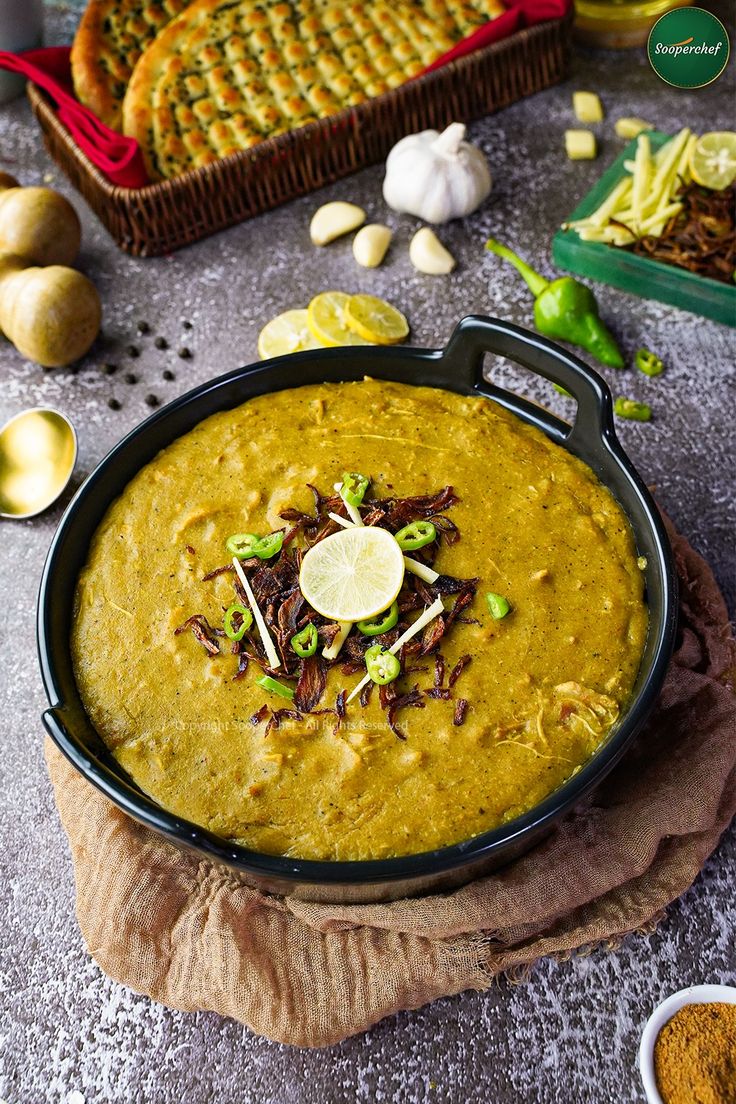
Introduction to Haleem
Haleem is a rich, wholesome, and deeply satisfying dish that holds a special place in South Asian and Middle Eastern cuisine. Known for its smooth yet hearty texture, Haleem is made by slow-cooking meat, lentils, and wheat together until they blend into a thick, flavorful paste. It is especially popular during Ramadan, religious gatherings, and winter seasons due to its nourishing and filling nature.
Historical and Cultural Background
The origins of Haleem trace back to Middle Eastern cuisine, where a similar dish was prepared using meat and grains. It later traveled to the Indian subcontinent through traders and rulers and evolved into a regional favorite. In Pakistan and India, Haleem became deeply associated with cultural traditions and communal cooking. Large pots of Haleem are often prepared overnight, reflecting patience, generosity, and shared heritage.
Why Haleem is So Popular
Haleem is loved for its comforting texture, balanced spices, and nutritional value. The long cooking process allows flavors to develop slowly, resulting in a dish that is both mild and deeply aromatic. It is easy to digest despite being heavy and is often consumed as a complete meal. The topping of fried onions, herbs, and lemon enhances both taste and presentation.
Essential Ingredients Overview
The main ingredients of Haleem include boneless or bone-in meat such as beef, mutton, or chicken. Whole wheat grains, barley, and a mix of lentils like chana dal, masoor dal, and moong dal form the base. Onions, ginger, garlic, and green chilies add depth, while spices such as coriander, cumin, red chili powder, turmeric, and garam masala provide warmth. Cooking oil or ghee adds richness to the dish.
Preparation Before Cooking
Before cooking Haleem, thorough preparation is essential. Wheat and barley should be washed and soaked for several hours to soften them. Lentils are also cleaned and soaked separately. Meat is washed and cut into medium pieces. Onions are thinly sliced, and ginger and garlic are crushed fresh. Preparing everything in advance ensures smooth cooking and proper timing.
Cooking the Grains and Lentils
Soaked wheat, barley, and lentils are cooked together in a large pot with sufficient water until they become very soft. This process may take a long time and requires occasional stirring. Once fully cooked, the mixture is blended or mashed to achieve a smooth consistency. This grain base is what gives Haleem its signature texture.
Preparing the Meat Masala
In a separate heavy-bottomed pot, oil or ghee is heated and sliced onions are fried until golden brown. Ginger and garlic are added and sautéed until fragrant. Meat pieces are then added and cooked until they change color. Spices and salt are added gradually, and the mixture is cooked until oil separates, forming a rich masala base.
Combining Meat and Grain Mixture
The prepared grain and lentil mixture is added slowly to the cooked meat masala. Continuous stirring is important to prevent lumps and ensure even mixing. Water or stock can be added gradually to adjust consistency. The mixture is cooked on low heat for an extended period, allowing the flavors to blend completely.
Slow Cooking and Dum Process
Haleem requires slow cooking on low heat, often for several hours. This process breaks down the meat fibers and allows them to blend seamlessly into the grains. Regular stirring is essential to prevent sticking and burning. Some cooks finish Haleem on dum by sealing the pot, which enhances aroma and richness.
Achieving Perfect Texture
The ideal Haleem texture is thick, smooth, and slightly stretchy. It should not be watery or overly dry. Continuous stirring and proper balance of liquid help achieve this consistency. Traditionally, a wooden spoon or paddle is used to stir Haleem, which helps mash the ingredients evenly.
Final Flavor Adjustment
Once the Haleem reaches the desired texture, taste is adjusted with salt and spices. Garam masala and green chilies may be added at this stage for aroma. A small amount of ghee can also be stirred in to enhance richness. The Haleem is then cooked for a short time to allow final flavors to settle.
Traditional Garnishing
Haleem is served with generous garnishing that adds contrast and freshness. Fried onions, chopped coriander, mint leaves, sliced green chilies, and ginger juliennes are commonly used. Lemon wedges are served on the side, allowing each person to adjust acidity according to taste. These toppings elevate both flavor and appearance.
Serving Suggestions
Haleem is best served hot with naan, khameeri roti, or plain bread. It can be enjoyed on its own as a complete meal or paired with simple side dishes. Many people enjoy Haleem during evening meals or as a special dish during religious occasions. Serving it fresh enhances its aroma and taste.
Tips for Authentic Haleem
Using a combination of lentils and grains gives Haleem its authentic depth. Slow cooking should never be rushed, as time is essential for proper texture. Fresh ginger and garlic significantly improve flavor. Stirring regularly prevents burning and ensures smooth consistency. Allowing Haleem to rest briefly before serving helps flavors stabilize.
Popular Variations of Haleem
Different regions prepare Haleem with slight variations. Chicken Haleem is lighter and quicker to cook, while beef and mutton versions are richer. Some variations use additional spices or reduced lentils based on preference. Despite these differences, the essence of slow cooking and thick texture remains consistent.
Nutritional Value and Balance
Haleem is highly nutritious due to its combination of protein, carbohydrates, and fiber. Meat provides protein and iron, while lentils and grains supply energy and digestion-friendly fiber. Spices such as ginger and garlic offer health benefits. Because it is filling, moderate portions are usually sufficient for a balanced meal.